Why Wheel Alignments Matter More Than Most Drivers Realize
You probably don't think much about your wheel alignment until your car starts pulling to one side or your tires wear out sooner than expected. After all, if the steering feels normal, everything should be fine, right? Unfortunately, alignment problems don't always show up right away.
Even small changes in wheel angles can affect how your vehicle handles and how quickly your tires wear. Here’s why wheel alignments matter more than most drivers realize .
What a Wheel Alignment Actually Does
A wheel alignment adjusts your wheels' angles to your vehicle manufacturer's specifications. Your wheels need to point in the right direction and sit at the proper angles to maintain consistent contact with the road. When those angles shift, your tires no longer roll as efficiently as they should. Over time, that small difference can create noticeable wear.
Understanding Toe, Camber and Caster
Technicians focus on three main alignment angles. Toe describes whether your tires point inward or outward when viewed from above. Incorrect toe can make your tires scrub across the pavement as you drive, gradually removing tread.
Camber, on the other hand, refers to how much a wheel tilts inward or outward when viewed from the front. Too much tilt can concentrate wear along one side of the tire.
Lastly, caster affects steering stability and how naturally your steering wheel returns toward center after a turn. Technicians evaluate these angles against manufacturer specifications, although not every vehicle allows adjustment of all three.
How Poor Alignment Wears Down Your Tires Faster
Your tires should make consistent contact with the pavement as they roll. When the wheels fall out of alignment, certain areas of the tread experience more friction than others. Instead of wearing evenly, the rubber begins disappearing in specific spots. You can end up replacing tires that still have plenty of tread elsewhere.
Incorrect toe creates particularly noticeable problems because the tires scrub against the road instead of rolling cleanly. Even a small toe error can produce substantial wear over thousands of miles.
Here's where things get frustrating. Replacing worn tires without correcting the alignment allows the same damage to happen again. Before spending money on another set, have a technician inspect the alignment and related suspension components.
Look for Wear Along the Tire Edges
Take a closer look at the inner and outer edges of your tires. If one edge looks noticeably thinner than the other, the wheel alignment deserves attention. Feathered tread blocks that feel smoother in one direction than the other can also indicate a toe problem. A proper inspection helps identify what's actually causing the damage.
Why Your Steering Starts To Feel Different
Your steering wheel should feel steady when you're traveling along a relatively level, straight road. If you constantly correct the wheel to stay in your lane, something deserves a closer look. Poor alignment can cause the car to drift even when you're trying to drive straight.
You may also notice that the steering wheel sits slightly off-center. That doesn't automatically mean alignment is the only problem. Uneven tire pressure or worn steering components can create similar handling concerns.
Still, you shouldn't ignore a noticeable change in steering behavior. A vehicle that tracks properly requires fewer corrections, making everyday driving more comfortable and predictable.
The Connection Between Wheel Alignment and Fuel Economy
Here's something drivers often overlook: improper alignment can increase rolling resistance. When your wheels don't point in the correct direction, the tires create additional drag as they travel across the pavement. Your engine has to overcome that resistance to keep the vehicle moving.
The effect depends on how far the alignment has shifted and the conditions you drive through. You won't necessarily see a dramatic change at the gas pump after one adjustment. However, correcting poor alignment removes an unnecessary source of resistance that can waste fuel.
Why Tire Rotations and Balancing Can't Replace Alignment
It's easy to confuse wheel alignment with other tire services because they all improve the driving experience. However, each service addresses a different problem. Understanding that distinction helps you choose the right repair instead of spending money on something that won't resolve the issue.
Tire rotation changes where each tire sits on the vehicle. This helps distribute wear because front and rear tires experience different demands. Regular rotations support tire life, but they cannot correct improper wheel angles.
Wheel balancing, on the other hand, addresses weight distribution within the tire and wheel assembly. If the assembly is unbalanced, you may feel vibration at certain speeds. A technician adds balancing weights where necessary to help the assembly rotate smoothly.
What Happens During a Professional Wheel Alignment?
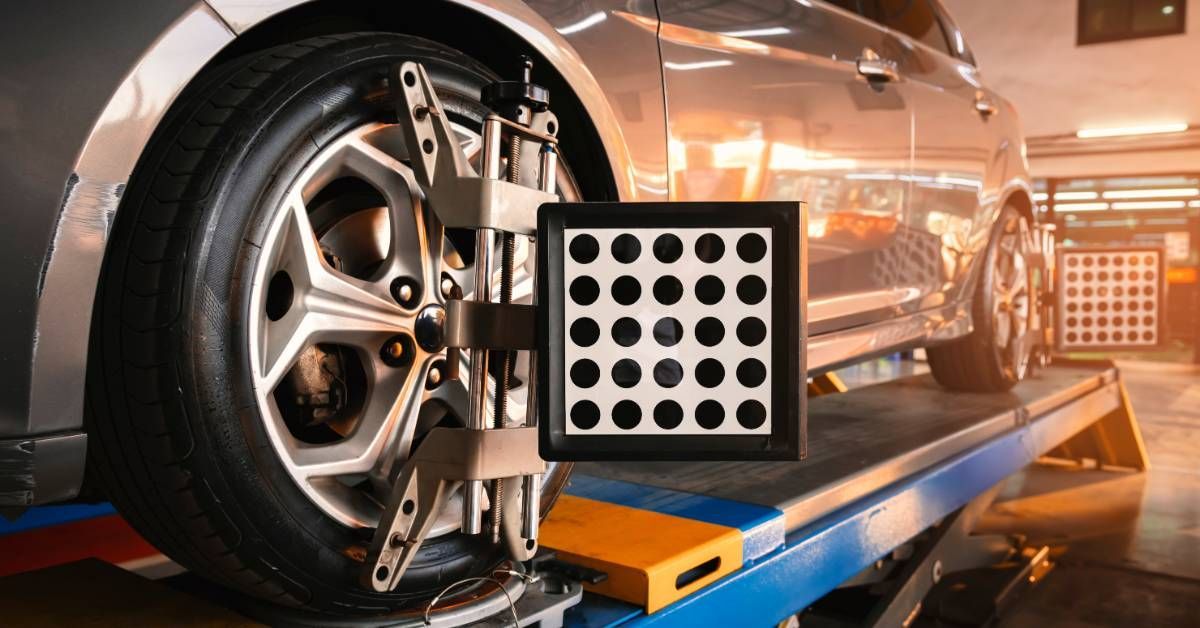
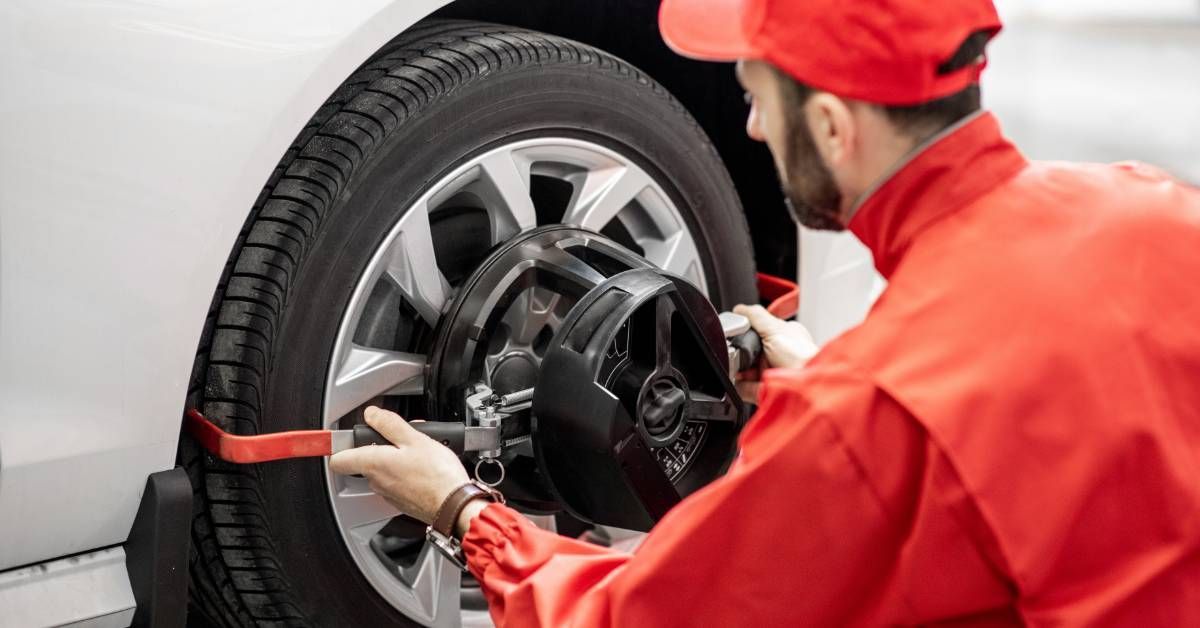
A proper wheel alignment involves more than simply adjusting a few components. Technicians use specialized alignment equipment to measure your wheels' position. They compare those measurements with the manufacturer's specifications for your vehicle.
The equipment helps identify which angles fall outside the recommended range. From there, the technician determines what needs adjustment and whether another issue requires attention first.
Why the Suspension Inspection Comes First
Before making adjustments, a technician typically checks for worn or damaged steering and suspension components. Loose tie rods or worn ball joints can prevent the wheels from staying in the correct position. If those parts need replacement, adjusting the alignment first won't provide a lasting solution.
Once the vehicle's components are in suitable condition, the technician can make the available alignment adjustments. Depending on the vehicle, the process also involves checking rear wheel alignment and thrust angle.
When Should You Have Your Wheel Alignment Checked?
You don't need to wait until your tires show severe wear to schedule an alignment inspection. In fact, catching a problem early gives you a better chance of keeping your current tires in good condition. Your vehicle's behavior often provides the first useful clues.
Pay attention to these common signs:
- Your vehicle consistently pulls to one side on a level road.
- Your steering wheel sits off-center while driving straight.
- One edge of a tire wears faster than the other.
- Your tire tread develops a noticeable feathered pattern.
- Your handling changes after hitting a pothole or curb.
- You've recently replaced steering or suspension components that affect alignment.
If you notice these changes, have a technician inspect the vehicle. The problem could involve alignment, but an inspection should also rule out tire and suspension concerns.
Keep Your Tires and Your Driving Experience on Track
A properly aligned vehicle should feel predictable on the road. You shouldn't have to correct your steering just to keep traveling straight! Wheel alignments matter more than most drivers realize because they keep your vehicle handling the way it should. If you've noticed uneven tread wear or changes in steering, getting an alignment inspection can help you address the problem before it leads to unnecessary expenses.
Advanced Vehicle Technology Services is a car service center that helps drivers in Buffalo Grove, IL, and the surrounding areas stay on top of their vehicle's maintenance and repair needs. If you've noticed uneven tire wear or changes in how your vehicle handles, our team can help you identify the problem before it leads to more expensive repairs. Contact Advanced Vehicle Technology Services today to schedule an appointment and keep your car running smoothly.
You might also like