Uneven Tire Wear Causes and Repair Solutions
You expect tires to wear as the miles add up, but they should not wear out in strange patches or disappear along one edge. When the tread starts to look different from tire to tire, your vehicle is usually telling you that something has changed.
Getting familiar with uneven tire wear causes and repair solutions can help you catch that change before it ruins a good set of tires. Better yet, you may uncover an alignment or suspension problem while the repair is still manageable!
Why Uneven Tire Wear Deserves Your Attention
Uneven wear does more than shorten tire life. It can change how your vehicle handles, especially during braking or in wet weather. You may also notice extra road noise before you see anything unusual in the tread. If the wear continues to progress, replacing the tire alone will not solve the underlying problem.
A new tire can begin wearing the same way if the alignment remains off or a suspension part still has play. You end up paying for another tire without fixing what damaged the first one.
Start With a Close Look at the Tread
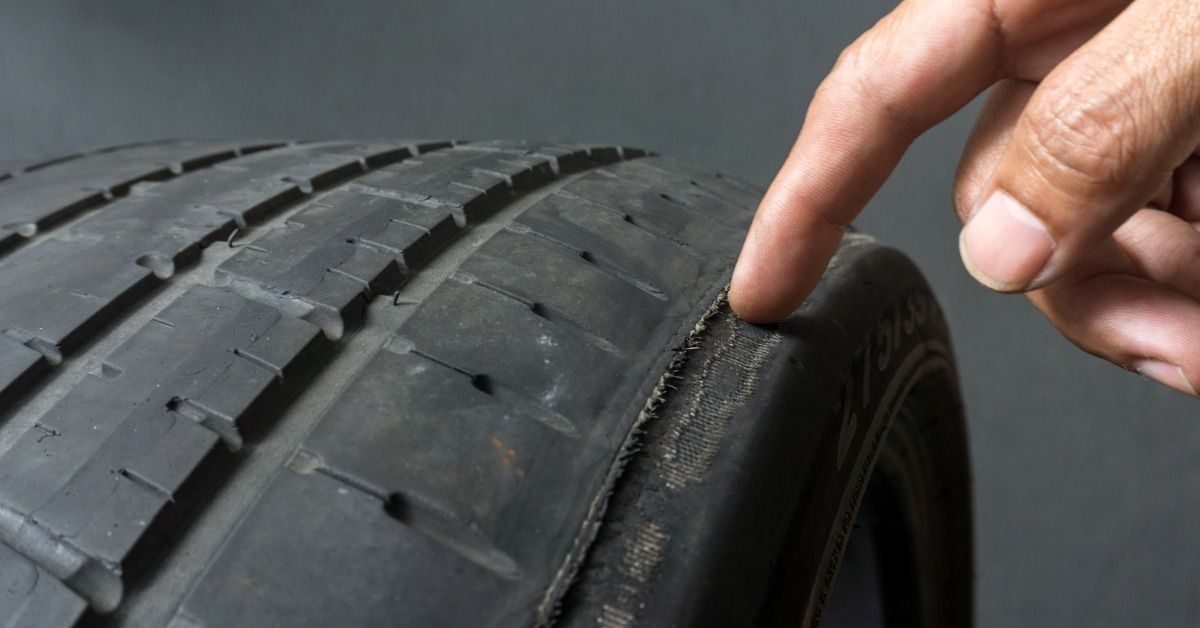
Park somewhere level and turn the steering wheel so you can see more of the front tire surface. Compare the inner edge with the center and outer edge instead of glancing at one spot. Run your hand lightly across the tread if the tire feels cool and safe to touch. A difference you can feel may reveal wear that is easy to miss from standing height.
Tire Pressure Can Change the Wear Pattern
Tire pressure directly affects how the tread meets the road. When a tire runs underinflated, more of the outer shoulders carry the load. Over time, those edges may wear faster than the center. The tire also flexes more, which creates extra heat while you drive.
Too much air causes a different problem. An overinflated tire may place more pressure through the center of the tread, so the middle wears faster. You can avoid both patterns by checking pressure when the tires are cold. Use the pressure listed on the vehicle’s door placard!
Do Not Ignore One Tire That Keeps Losing Air
If one tire needs air every week or two, something is causing that loss. A small puncture may be hiding in the tread, or the valve could be leaking. Damage around the wheel can also allow air to escape slowly. Instead of repeatedly topping it off, find and repair the leak before low pressure damages the tire.
Wheel Alignment Often Sits Behind One-Sided Wear
When one edge of a tire disappears much faster than the other, the wheel alignment deserves a closer look. Your wheels need to sit at specific angles so the tread contacts the pavement correctly.
However, a pothole strike or curb impact can change those angles enough to start wearing down the rubber. Normal suspension wear can gradually shift alignment, too. If the inside or outside edge looks noticeably thinner, schedule an alignment check before replacing the tire.
An Alignment Works Best After Worn Parts Get Fixed
An alignment cannot compensate for a loose steering or suspension component. If a ball joint or tie rod has excess movement, the wheel angle can change while you drive. A technician can inspect those parts before making final alignment adjustments. Fixing the mechanical problem first gives the alignment a better chance of staying where it belongs.
Worn Suspension Parts Can Chew Through Tread
Your suspension keeps each tire planted against the road as the vehicle moves over bumps. When shocks or struts lose control, the tire can bounce instead of maintaining steady contact with the road. That movement may create cupped or scalloped sections across the tread. You may also hear more road noise as the pattern gets worse.
Other suspension components can affect wear by allowing the wheel to move where it should not. A worn bushing, for example, may cause the wheel to shift position as the vehicle accelerates or turns. The tire takes the punishment even though it did nothing wrong. Once a technician replaces the worn component, an alignment may also be necessary to restore proper geometry.
Rotation and Balancing Help Tires Share the Work
Your tires do not all perform the same job. Front tires often handle more steering forces, while the driven wheels deal with acceleration loads. Without regular rotation, one pair may wear much faster than the others. Following the rotation pattern recommended for your vehicle helps spread that workload more evenly.
Balancing addresses a different issue. A wheel and tire assembly that has an uneven weight distribution can create vibration as speed increases. Over time, that repeated movement may contribute to irregular tread wear. If the steering wheel starts shaking at highway speeds, ask to have the wheel balance checked, too.
Road Impacts and Driving Conditions Leave Clues
Sometimes uneven wear starts with one hard hit. A deep pothole can knock alignment out of specification or damage a wheel. The vehicle may continue driving normally enough that you forget about the impact. Several weeks later, you notice one tire wearing differently.
Rough roads can also accelerate wear on suspension components over time. If your daily route includes broken pavement, it makes sense to pay closer attention to tire condition between regular services. You do not need to schedule an alignment after every bump! However, a new pull or fresh steering vibration after a hard impact deserves an inspection.
What Your Tread Pattern Is Telling You
Tire wear patterns give us a useful starting point, but they do not replace an inspection. That is why you want to pair what you see with how the vehicle drives. The pattern points us in the right direction, and testing confirms the repair!
Here are a few common patterns worth watching:
- Wear along both outer edges: Check for chronic underinflation.
- Heavy wear through the center: Verify that the tire is not overinflated.
- Wear concentrated on one edge: Have the wheel alignment inspected.
- Scalloped or cupped patches: Check wheel balance and suspension condition.
- Feathered tread blocks: Look closely at alignment angles and steering components.
- One tire wearing faster than the rest: Check pressure, alignment, and related mechanical parts.
Early patterns may feel subtle, but catching that change early gives you more time to repair the cause before the tire becomes unusable.
Keep Your Tires Wearing Evenly From Here
Once you know the common causes of uneven tire wear , it’s easier to decide which repair solutions you need. Keep up with the recommended rotation schedule, but pay attention between services if the steering suddenly changes. Those small check-ins give you a chance to respond while the tread still has plenty of life left.
If you are unsure what a wear pattern means, you do not have to diagnose it in the driveway. Bring the vehicle in and show the technician what caught your attention. At Advanced Vehicle Technology Services, our team can inspect your tires as part of any vehicle repair service you need. Give us a call today or drop by, and let’s get your car back on the road.
You might also like