The Importance of Professional Diagnostics in Auto Repair
You know that sinking feeling. You are driving along, singing to the radio, and suddenly an orange symbol glows on your dashboard. It’s the check engine light. Your mind immediately races to the worst-case scenarios. Is the engine going to explode? Is the transmission failing? It is tempting to ignore it and hope it goes away, or perhaps you drive to a local parts store for a free code scan.
However, when something goes wrong, pinpointing the exact cause requires more than just a code reader. It requires expertise. The importance of professional diagnostics in auto repair cannot be overstated because it can be the difference between fixing the problem correctly the first time and throwing money at a guessing game.
The Myth of the Simple Code Scan
Most drivers believe that when the check engine light comes on, the car tells the mechanic exactly what is wrong. This is a common misconception. The computer provides a trouble code, which serves as a starting point rather than a final answer.
Codes Are Directions, Not Destinations
Think of a diagnostic trouble code (DTC) like a zip code. It tells the technician which neighborhood the problem is in, but it does not give the specific house address. If a code indicates a "misfire in cylinder 4," that does not automatically mean you need a new spark plug. The issue could be a bad ignition coil, a clogged fuel injector, a vacuum leak, a compression issue, or even a faulty computer driver.
Relying solely on the code results in replacing perfectly good parts while the root cause remains. A professional diagnostic involves taking that code and performing a series of targeted tests to isolate the specific failure.
The Limitations of Parts Store Scans
Auto parts stores offer free scans to sell parts. Their goal is to move inventory, not necessarily to fix your car efficiently. Their scanner might show a code for a "Lean Condition," and the counter person might suggest a new Mass Air Flow sensor. You buy it, install it, and the problem persists. Why? Because a vacuum leak from a cracked $5 hose caused the lean condition, not the expensive sensor.
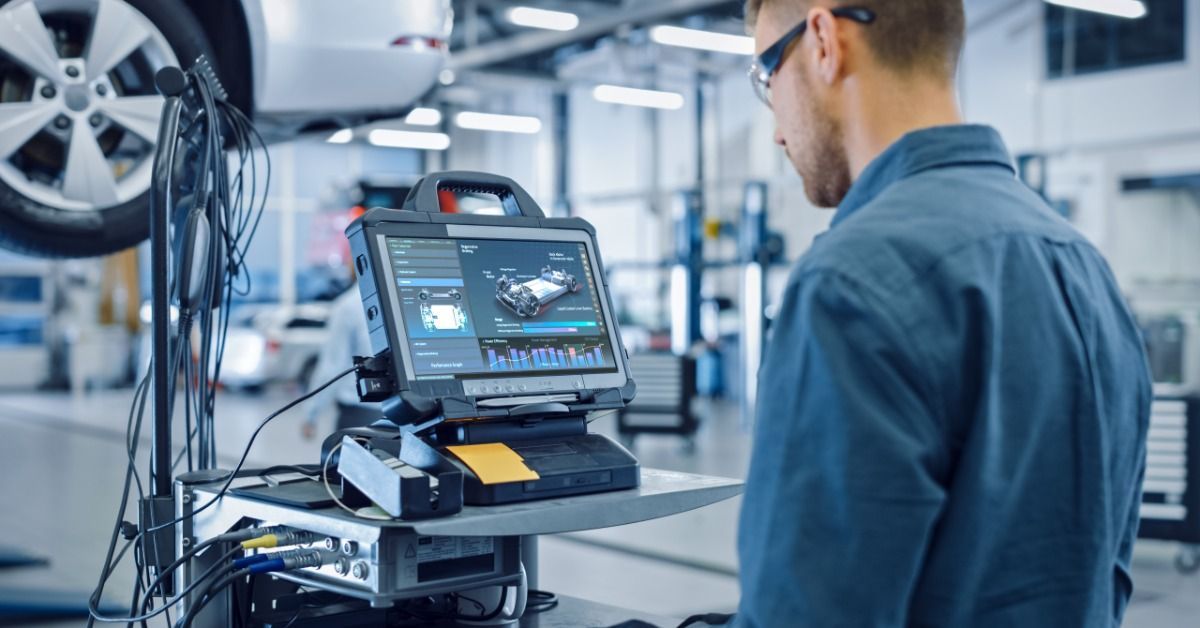
Professional mechanics use advanced diagnostic equipment that does far more than pull codes. These tools allow them to read live data streams, command specific modules to operate, and view the waveforms of electrical signals. They see what the computer sees in real-time, allowing them to spot glitches that a simple code reader would miss entirely.

The Financial Impact of Guesswork
Many people hesitate to pay for a diagnostic fee. It feels like paying for nothing tangible since you are paying for an answer rather than a physical part. However, skipping this step usually costs much more in the long run.
Avoiding the Parts Cannon Approach
Mechanics have a term for trying to fix a car without a proper diagnosis: firing the "parts cannon." You keep loading new parts into the vehicle, hoping one of them hits the target. This approach gets expensive very fast. You might replace a battery, then an alternator, and finally a starter, only to realize the actual problem was a corroded ground cable that cost ten dollars to fix.
Investing an hour or two of diagnostic time prevents this waste. You pay for the technician’s time and expertise to verify exactly what failed. When they recommend a repair, you can be confident that it will actually solve the issue.
Safety Systems Require Precision
While engine performance is important, modern diagnostics also cover safety systems. Your anti-lock brakes (ABS), airbags (SRS), and traction control systems rely on the same complex network of sensors and computers.
Beyond the Engine Bay
Safety features require absolute precision. If your ABS light is on, your brakes might still work for normal stopping, but in an emergency panic stop, the wheels could lock up, causing you to skid. A professional diagnostic determines whether the sensor is bad, whether the tone ring is cracked, or whether the wiring harness has a break.
Guessing with safety systems is dangerous! You need to know for certain that your airbags will deploy in a crash or that your stability control will catch you on a patch of ice. Professional technicians are trained to test these critical safety components in accordance with factory procedures. They verify the system's integrity so you can drive with peace of mind.
The Role of Software Updates
Hardware isn't the only thing that breaks on modern cars. Sometimes the software running the car needs attention. Manufacturers release updates (often called "flashes") to fix bugs, improve transmission shifting, or adjust emissions parameters.
Neither a DIY mechanic nor a parts store can perform these updates. Professional shops subscribe to manufacturer databases and have the pass-through devices necessary to install these updates. Without that professional insight, you might spend endless hours searching for a mechanical failure that doesn't exist.
The Human Element in a Digital World
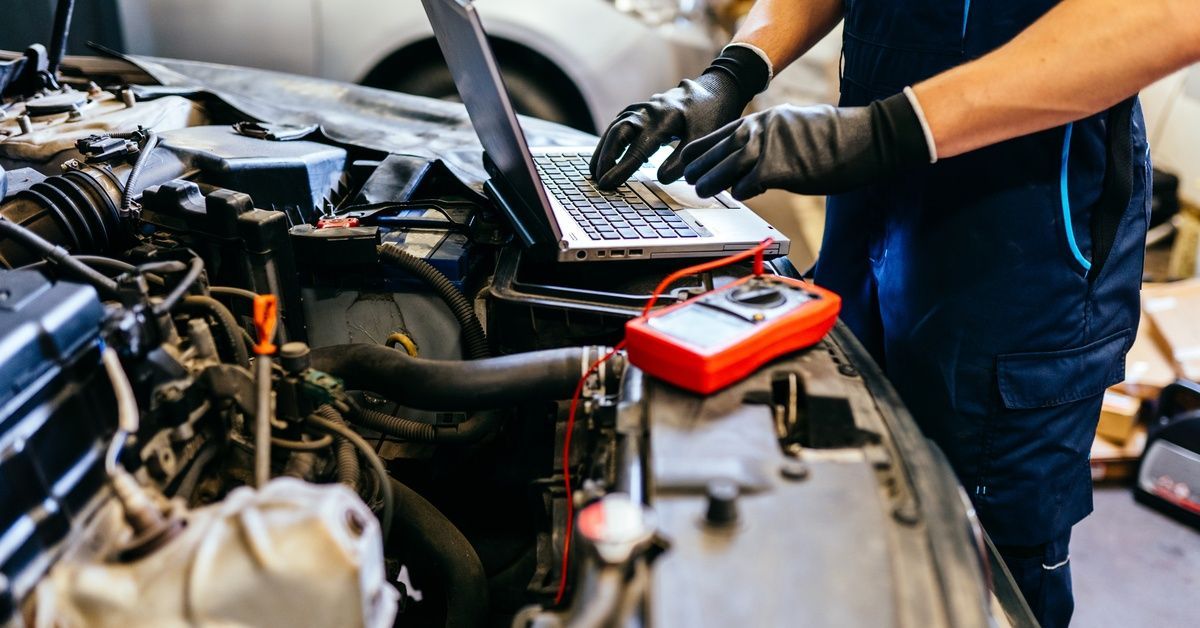
Tools and computers are essential, but they are useless without a skilled operator. The most critical component of a professional diagnostic is the technician.
Experience Beats Algorithms
An experienced technician uses their senses along with their tools. They listen for specific rattles, smell for coolant or burning electrical components, and feel for vibrations. They have seen hundreds of similar cars and know the common pattern failures for your specific make and model. Professionals use scanner data to confirm their suspicions, but their experience guides the search and repair.
Interpreting the Data
Data provides facts, but interpretation provides answers. A scanner might show that the engine temperature is reading -40 degrees. The computer thinks it is freezing outside and dumps extra fuel into the engine to compensate.
A professional can look at the data and notice that the voltage on that circuit is zero, indicating a broken wire, not a bad sensor. They understand how a problem with the transmission affects engine RPM, or how a weak battery affects electric power steering.
Taking Care of Your Investment
Your vehicle is likely the second-most-expensive purchase you will make, right after your home. Maintaining it requires more than just oil changes and tire rotations. It requires listening to the car when it complains and having a professional translate those complaints into actionable repairs.
Skipping the diagnostic fee feels like saving money, but it is a false economy. The importance of professional diagnostics in auto repair is the safety and accuracy it provides. Next time a warning light pops up, resist the urge to guess. Trust the experts instead.
Is your check engine light causing concern? Don’t let car troubles disrupt your day! At Advanced Vehicle Technology Services, we provide reliable auto repair in Buffalo Grove, Illinois. Our expert technicians are here to diagnose and quickly fix your vehicle. Trust us to keep your car running smoothly. Schedule your appointment today!
You might also like